



Endodontics
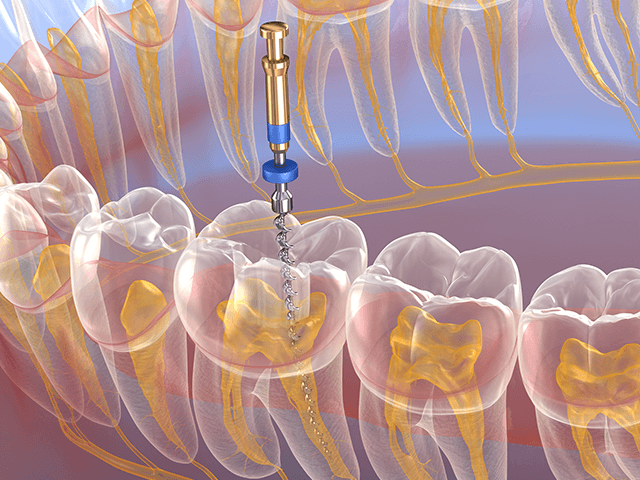
Endodontics is a field that deals with the diseases of tissues such as nerves and vessels seen in and around the tooth core.
It has been known mostly by means of root canal treatment in recent years. The endodontics branch deals with diseases of the dental pulp, whitening of teeth, repair of traumatized teeth, and diagnosis and treatment of many other ailments covered by endodontics.
What is Endodontics?
Endodontics is a department within dentistry. The mouth and teeth are where the digestive system begins. The visible parts of the teeth are called the crown, and the part embedded in the jaw is called the root. The top layer of the crown is the tooth enamel.
There is a layer of dentin surrounding the root of the tooth, and this layer has nerve endings. Infections and inflammations seen here can lead to tooth loss. Root canal, among the endodontic treatments, is performed to prevent the patient from losing their tooth.
Why is Endodontic Treatment Performed?
Root canal treatment is not performed for every painful or decayed tooth. Fillings are the only way to treat mild or completely painless bacterial caries. If left untreated at this stage, bacteria invade the tooth's core and cause inflammation that requires root canal treatment. Some signs that patients need root canal treatment are as follows:
- Severe toothache when biting or applying pressure
- Sensitivity to heat or cold
- Discoloration of teeth
- Swelling and tenderness in adjacent teeth
Even if there is no tooth decay, dental inflammation may occur for different reasons. The first of these is exposure to trauma.
A hard blow can stop the blood flow to the tooth, rendering it incapable of feeding, which over time causes the tooth to lose its vitality. Clenching, some fillings, and restorations are also sources of chronic trauma and can cause inflammation.
In addition to these, neglected periodontal diseases are also a factor that contributes to the formation of gingivitis. In these cases, endodontics is considered an option.
How is Endodontic Treatment Applied?
Endodontic treatment involves removing and cleaning, shaping, and filling the tissues with a supporting filling of pulp tissue that is inflamed for various reasons or damaged by microbial colonization.
All of these procedures are called root canal treatment. It is essential to fully understand the structure of the involved tooth before starting this treatment. Thanks to the X-ray taken, it is possible to provide this service.
In a successful treatment, the root canal of the tooth is reached, the pulp is removed and the tooth is shaped to adapt to the filling material.
When all procedures are completed, the X-ray of the tooth is taken once again and checked by the dentist. The answer to the question of "how long endodontic treatment will take" depends on the location of the tooth being worked on and the level of infection.
Generally, it can be said that root canal treatment is completed in 2 sessions, and one session lasts an average of 50 minutes.
Considerations After Endodontic Treatment
Some conditions to keep in mind when gradually healing teeth after endodontic treatment:
- Biting hard and crusty foods should be avoided until the treatment process is over.
- Since tooth sensitivity occurs, care should be taken to clean the teeth at least twice a day by brushing them with soft, circular movements.
- Dental care is necessary for both root canal treatment and general oral health.
- Routine flossing is as important as brushing teeth in order to prevent a possible infection after endodontic treatment.
- Attention should be paid to the consumption of sticky foods such as jelly beans and sugary foods for a while after the treatment. Sugar is one of the main causes of tooth decay. Sugar consumption should be limited for oral health and whole body health.
Frequently Asked Questions
- Is there an alternative to root canal treatment?
-
The success rate in endodontic treatments is very high. This figure reaches 95%. As it is known, the protection of natural teeth is the first priority. Bridge treatment, implant, or a prosthesis can be preferred as an alternative to root canal treatment. However, all these options are usually more costly than root canal treatment and have a longer treatment period.
- Is it possible to do root canal treatment again?
-
Yes. Root canal treatments can be repeated if necessary. If the treatment does not result in the desired way, the filling is emptied first. Root canals are reshaped, cleaned, and filled.
The probability of repeating a successful endodontic treatment is very low. If the patients follow the instructions given to them by the dentist, that is, if they take care of their oral health, there will be no problem. With a single root canal treatment with proper dental care, the patients can use their teeth for life.
- Will there be pain after root canal treatment?
-
Endodontic treatments are commonly known as painful procedures among patients. However, root canal treatment does not cause more pain and sensitivity than a filling procedure. The patient may feel some pain due to the current dental inflammation.
During the few days after the end of the root canal treatment, it is normal to experience some tenderness in the area where the infection has cleared. This can be prevented with painkillers prescribed by the dentist.
- How much does root canal treatment cost?
-
The cost of root canal treatment may vary depending on the experience of the dentist, the condition of the patient's teeth, and the number of root canals.
Contact Us
Address
Çukur Mahallesi, Tarlabaşı Bulvarı No:150/170 kat:3 no:25 Beyoğlu/İstanbul
CALL US